If you are thinking about buying a condo in Goleta near UCSB, you are looking at one of the most consistently active pockets in the South Coast market. That can create opportunity, but it also means small details matter more than many buyers expect. From HOA rules to parking rights and floor plan fit, knowing what to check early can help you make a calmer, more confident decision. Let’s dive in.
Why Goleta Condos Near UCSB Stay Popular
UCSB plays a major role in the local housing picture. The university reports an average on-campus student population of 24,673 during the 2023 to 2024 academic year, and it describes itself as the largest employer in Santa Barbara County and a key driver of South Coast economic activity.
That scale matters when you are evaluating a condo purchase. The City of Goleta has noted in its housing work that UCSB-generated demand affects the Goleta and broader South Coast housing market. In simple terms, this area tends to stay on buyers’ radar because of the university’s ongoing presence and influence.
Location appeal also goes beyond the campus itself. UCSB directs visitors to Goleta as the closest off-campus lodging base, which reinforces the practical connection between the university and nearby housing options.
Transit and Mobility Matter Here
A condo near UCSB is not just about square footage. Daily mobility can shape how convenient the home feels over time, especially if you want easier access to campus, shopping, the airport, or other parts of Goleta.
Santa Barbara MTD’s UCSB Rides service connects the Transit Center, Goleta, the airport, UCSB, and Camino Real Marketplace. The Wave microtransit service also adds on-demand connections that include the UCSB Bus Loop and Goleta and airport access points.
The City of Goleta is also working on its Train Depot project to improve connections to bus transit, UCSB, the airport, and bicycle and pedestrian facilities. In addition, the city’s bicycle planning aims to expand and improve walking and biking routes, including the Coast Route Bike Path corridor toward UCSB and Goleta Beach.
For you as a buyer, this means access is part of the value equation. A unit with strong transit and bike connections may offer more day-to-day flexibility than one that looks similar on paper but feels less connected in practice.
What Condo Layouts Look Like Near UCSB
This submarket tends to favor efficient floor plans over oversized interiors. Recent listings near UCSB have included one-bedroom units around 700 square feet, two-bedroom units around 960 to 1,117 square feet, and three-bedroom units around 1,222 to 1,942 square feet.
That range gives you a useful benchmark as you compare options. If you are expecting large, expansive condo layouts, you may find that many properties near UCSB are designed to maximize function rather than extra space.
This is one reason careful layout review matters. Two units with similar square footage can live very differently depending on storage, bedroom separation, natural light, and how the main living area is arranged.
Building Age Can Change the Buying Experience
Not all Goleta condo communities near UCSB offer the same ownership experience. Recent examples in the area include 1970s buildings, a 1980 condo-converted community, and newer 2019 construction.
That mix means project age can affect everything from maintenance expectations to reserve planning to the overall feel of the property. Older communities may offer established landscaping or mature surroundings, while newer buildings may present a different maintenance profile.
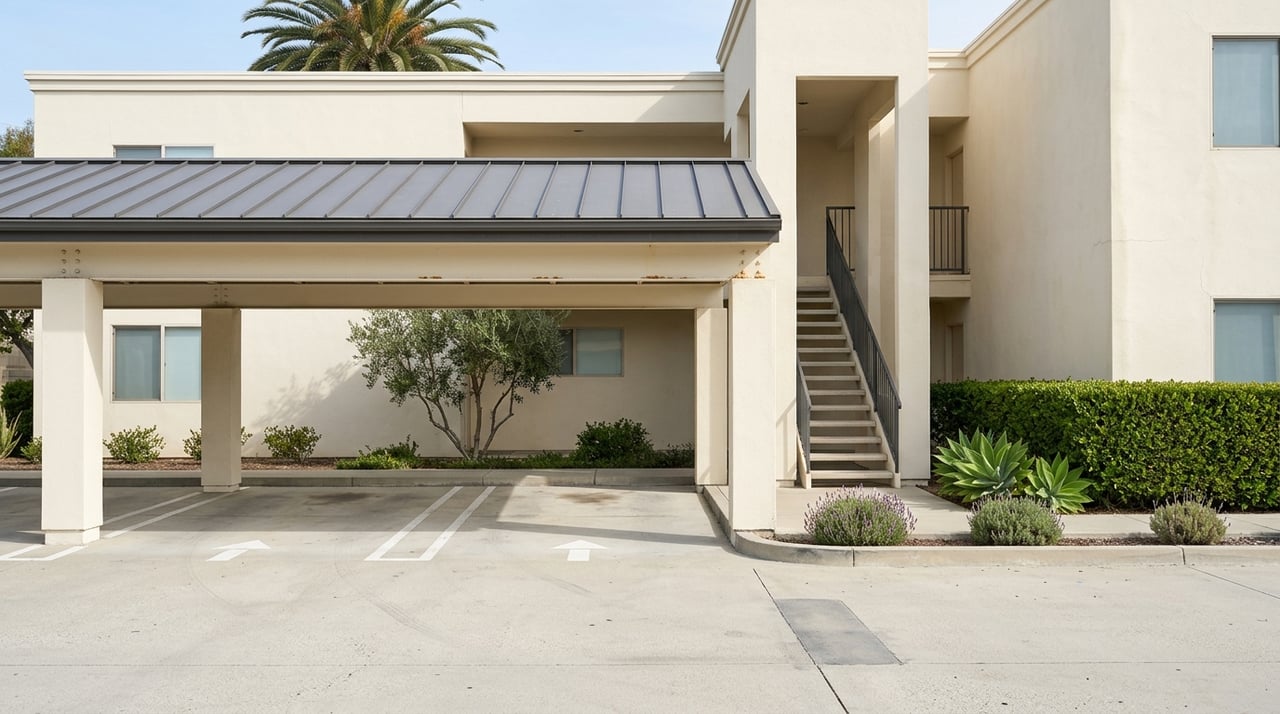
Amenities can also vary widely by project. Some communities advertise pools, clubhouses, laundry facilities, and play areas, while others highlight gyms, hot tubs, saunas, covered parking, or a reserved parking space near the unit.
Why HOA Review Is So Important
When you buy a Goleta condo, you are usually buying into a common-interest development. In California, that means you own your separate interest along with shared rights in the common area, and HOA membership transfers automatically with title.
The HOA’s CC&Rs, bylaws, and rules help govern how the property operates. The HOA board can also collect dues and assessments to fund common-area maintenance and operations.
For many buyers, this is where the real due diligence begins. The condo itself may feel straightforward, but the governing documents often tell you far more about how ownership will work month to month and year to year.
HOA Documents to Review Before Closing
California Civil Code requires key HOA documents to be delivered before closing. These materials can help you understand both the rules of the community and the financial health behind them.
You will usually want to review:
- The CC&Rs, bylaws, and rules
- The latest budget and disclosure package
- The current status of regular assessments
- Any special assessments
- Any unresolved violation notices
- Any project-specific restrictions on age, occupancy, pets, or use
A careful review can help you avoid surprises after closing. It can also help you compare one condo community to another in a more informed way.
Special Assessments Deserve Close Attention
Special assessments are one of the most important issues to clarify in any condo purchase. The California Department of Real Estate notes that they may be used for major repairs or unexpected costs.
The DRE also notes that, without member approval, the annual total of special assessments generally cannot exceed 5 percent of budgeted expenses. In conversion projects, reserve assumptions can be less reliable, and assessments may rise after developer control ends.
That does not mean a conversion project is automatically a poor choice. It does mean you should look closely at maintenance history, reserve planning, and whether future repair obligations seem clear or uncertain.
Parking Is More Than a Convenience
In this part of Goleta, parking can be one of the most practical filters in your search. A beautiful unit can lose some of its appeal if the parking arrangement is vague, inconvenient, or less secure than you expected.
Goleta’s zoning code generally requires 1 space per studio, 1.5 spaces per one-bedroom unit, and 2 spaces per two-bedroom-or-larger unit in multiple-unit development. Studios also generally require one covered space per unit plus one guest space for every three units.
Even with those standards, your actual ownership rights may vary by project. Recent nearby listings show that parking may take the form of a reserved spot, a covered space, or shared overflow parking.
Verify Parking Rights in Writing
This is one area where assumptions can cause problems. Listing photos or brief marketing remarks may not give you the full picture of what comes with the unit.
Instead, verify the exact parking right in the CC&Rs and resale documents. You will want to confirm whether the space is deeded, assigned, covered, shared, or subject to community rules that could affect how you use it.
For many buyers near UCSB, parking clarity is not a minor detail. It can shape daily convenience, resale appeal, and your long-term comfort with the property.
Bike Storage Also Matters
Bike access is part of everyday life in this area, so bicycle storage deserves a look during your review. Goleta requires at least one long-term bicycle parking space per unit in multiple-unit residential projects, and at least half of the required long-term bike parking must be covered.
That requirement supports the city’s broader effort to improve walking and biking connections. If you expect to rely on a bike for transportation or recreation, it is worth confirming how the specific community handles bike storage in real life, not just on paper.
Think About Future Flexibility
A condo that works for you today should also make sense a few years from now. The DRE advises buyers to think about whether a home will fit future needs, including remote work or aging in place.
Near UCSB, that often means looking beyond finishes and asking practical questions. Will the layout still work if you need a workspace at home? Will the storage be enough? Will parking, HOA rules, and access still feel easy if your routine changes?
Transit and bike connectivity can add flexibility over time, especially given Goleta’s and MTD’s ongoing access improvements in the UCSB area. A well-located unit may continue to serve you well even as your day-to-day needs evolve.
A Smart Way to Compare Condos
When you compare Goleta condos near UCSB, the best choice is often not the one with the flashiest presentation. In many cases, the more durable decision comes from balancing layout, location, HOA structure, operating costs, and maintenance history.
The unit that feels easiest to live in year after year is often the one with the clearest parking rights, the simplest HOA structure, and the least ambiguity about future repair obligations. That kind of clarity can bring real peace of mind.
If you want a steady, well-informed approach to evaluating Goleta condos and HOA-driven properties across the Santa Barbara corridor, Lisa Foley offers thoughtful local guidance grounded in experience, discretion, and careful attention to the details that shape long-term value.
FAQs
What should you review before buying a Goleta condo near UCSB?
- Review the HOA’s CC&Rs, bylaws, rules, budget, disclosure package, assessment history, unresolved violation notices, and any restrictions on occupancy, pets, age, or use.
Why is parking important when buying a Goleta condo near UCSB?
- Parking arrangements can vary by community, so you should confirm in writing whether your space is reserved, covered, assigned, shared, or otherwise limited by HOA rules.
How large are Goleta condos near UCSB usually?
- Recent listings near UCSB have included one-bedroom units around 700 square feet, two-bedroom units around 960 to 1,117 square feet, and three-bedroom units around 1,222 to 1,942 square feet.
Why do Goleta condos near UCSB stay in demand?
- UCSB’s large student population, major local employment role, and broad influence on the South Coast housing market help keep this area consistently relevant to buyers.
What makes one Goleta condo community different from another?
- Building age, project type, amenities, reserve assumptions, maintenance history, parking rights, and HOA structure can all meaningfully affect your ownership experience.