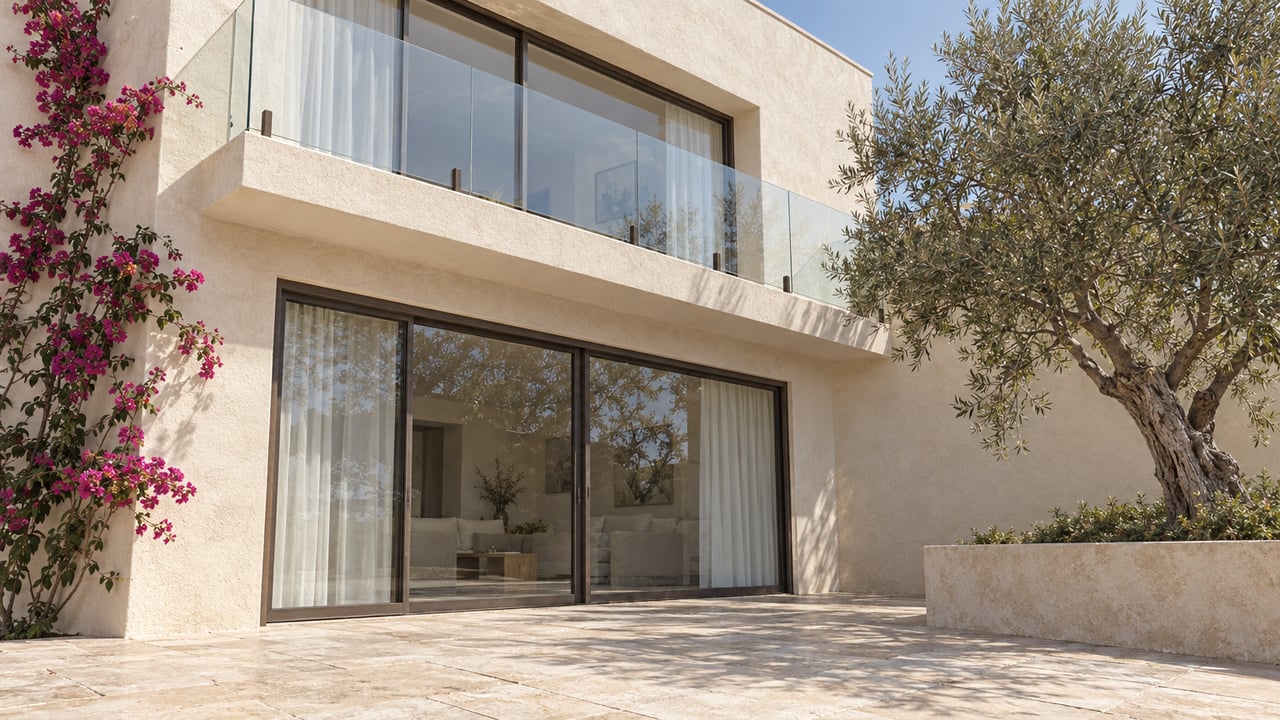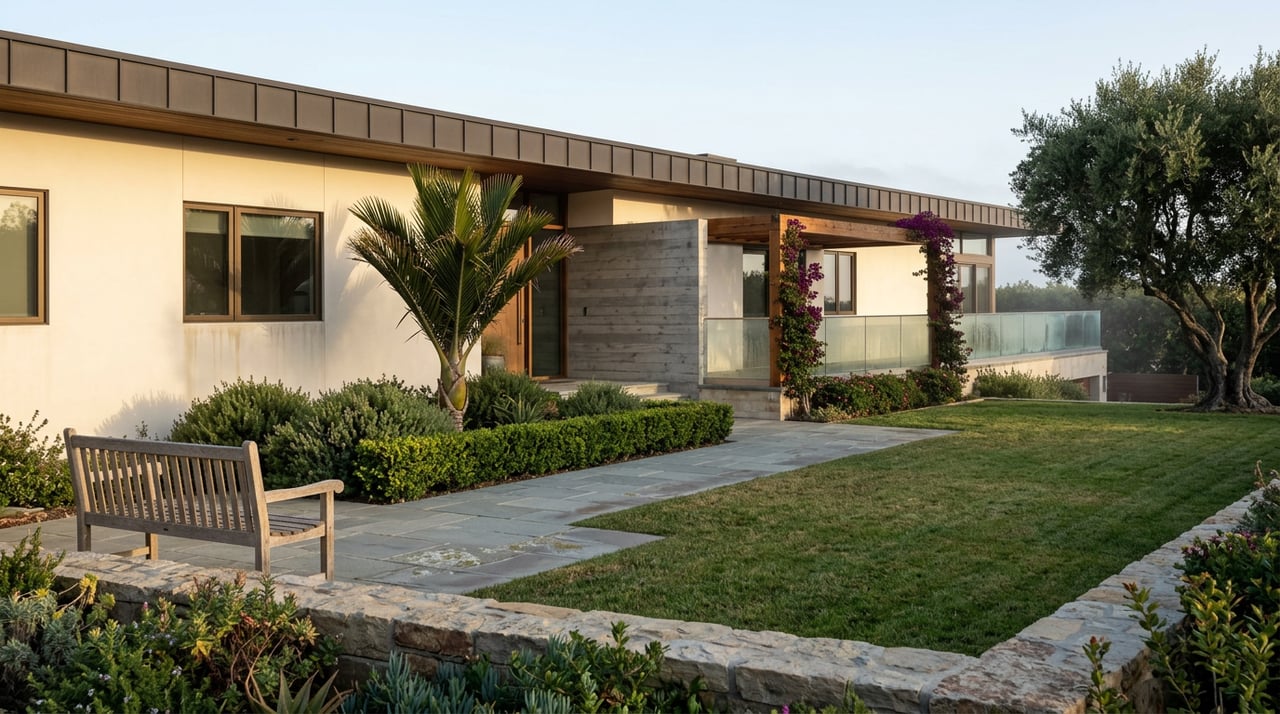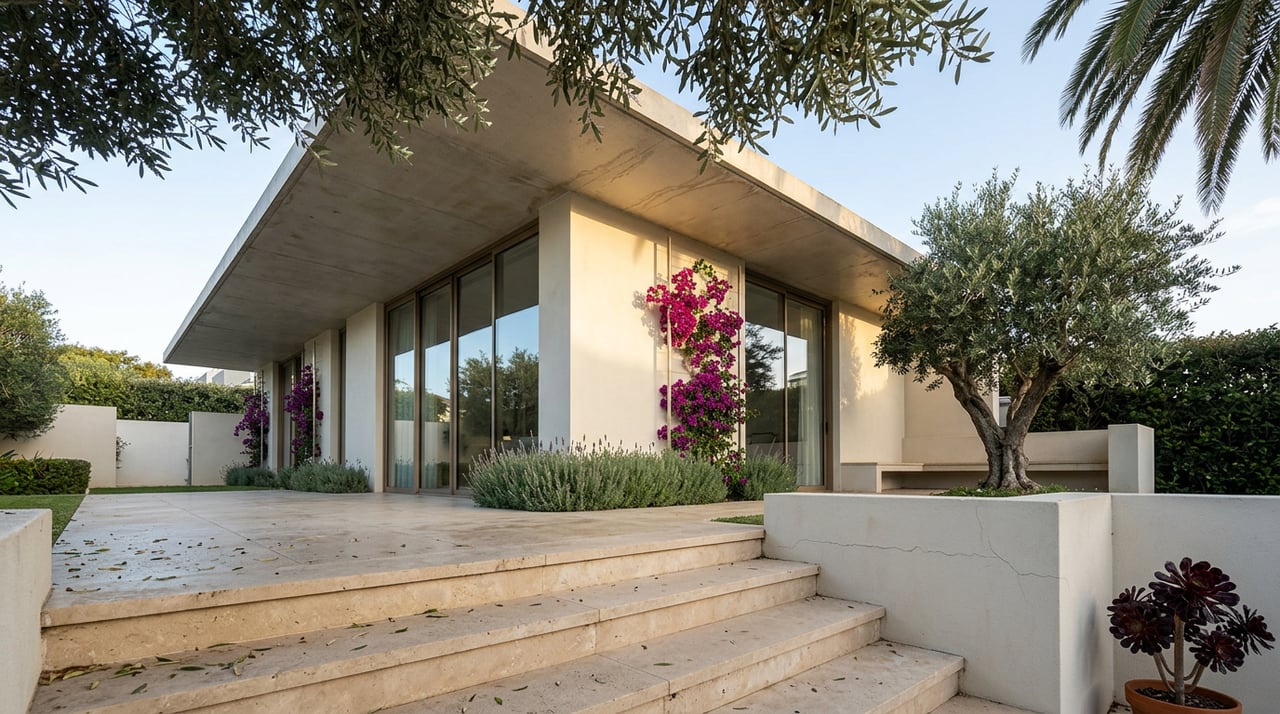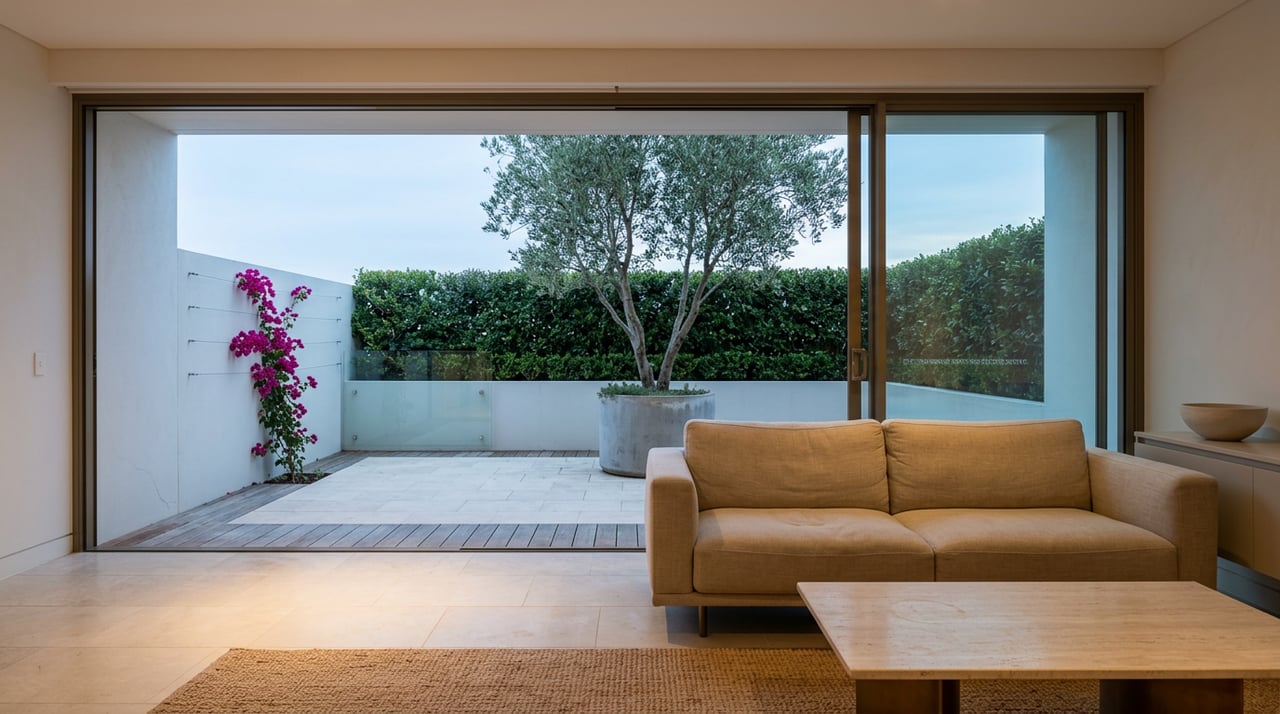
Drive past the single guarded entrance both communities share, along Butterfly and Hammond's beaches, and you're inside a stretch of coastline that most buyers describe as one place. Same gate. Same guard. Same easy walk to Coast Village Road for coffee or dinner. Ask a buyer what separates Bonnymede from Montecito Shores and most will point to the roofline: garden-style buildings on one side, three-story Spanish towers on the other.
That's the visible difference. It's not the one that costs money.
Bonnymede was built in 1965. Montecito Shores went up nine years later, in 1974. Both are governed as separate condominium associations under California's Davis-Stirling Common Interest Development Act, and both require the same category of financial homework before you write an offer: a reserve study. That single document, more than the monthly HOA statement a listing agent hands you on a tour, tells you whether the building's elevators, subterranean garage, roofs, and pool systems are funded for their next repair or whether the association is one bad winter away from a special assessment. The dues are what you pay today. The reserve study is what tells you what you'll pay tomorrow.
Two Communities, One Driveway
The physical differences aren't cosmetic. They determine what each association actually has to maintain, which is what drives the reserve math underneath the dues.
| Bonnymede | Montecito Shores | |
|---|---|---|
| Built | 1965 | 1974 |
| Units | 113 | 99 |
| Architecture | Garden-style, tropical | Spanish, three-story towers |
| Parking | Private garages for many units | Subterranean garage, 2 assigned spots per unit |
| Unit types | Studios through 3BR/3BA, including 30 townhouse-style units | Single-level only, 2BR and 3BR |
| Shared amenities | Pool, spa, tennis, rose garden, lemon orchard, oceanfront deck | Own pool, spa, tennis (separate association) |
Bonnymede sits on roughly eleven oceanfront acres and its mix includes 10 single-level 3-bedroom units, 28 single-level 2-bedroom units, 30 townhouse-style 2-bedroom units, 30 ground-floor 1-bedroom units, and 15 breezeway studios. Montecito Shores has no shared walls between residences at all. Each building is really three towers, and every unit is single-level, reached by elevator to assigned parking below.
Next door to both sits Montecito Sea Meadow, a separate guarded enclave. Residents of Bonnymede and Montecito Shores have reciprocal walking and cycling access through Sea Meadow's grounds, which is how residents reach Miramar Beach and the Rosewood Miramar Beach Resort without leaving the property line. It's a detail that never shows up on a spec sheet, but it shapes what a morning walk actually looks like here.
The Number On The Statement Isn't The Number That Matters
As of mid-2026, Montecito Shores posts HOA dues of $2,014 a month for two-bedroom units and $2,300 for three-bedroom units. Bonnymede calculates dues differently, scaling by square footage and percentage of common area, so there's no single published figure. One example circulated for a specific unit put its monthly dues in the mid-$1,400s, though that number is unit-specific and shouldn't be treated as a baseline.
A buyer comparing those two numbers might conclude Bonnymede is the cheaper hold. That comparison misses the point.
California requires condominium associations to commission a reserve study on a recurring cycle and to disclose the results, along with current financials and any pending assessments, in the resale packet required under Civil Code Section 4525. What that packet actually reveals is the percent-funded figure: how much the association has saved against what an independent analyst says it should have on hand right now for future roof, elevator, paving, and structural work. A building sitting at 70 percent funded or higher is generally considered in strong shape. One sitting well below that is a special assessment waiting for a trigger, whether that trigger is a failed elevator motor, a cracked subterranean garage slab, or a storm that takes out a section of oceanfront deck.
Neither Bonnymede's nor Montecito Shores' current percent-funded figure is something a buyer should assume from the outside. That's precisely why it has to be requested and read, not inferred from the size of the monthly bill. A lower due on a nine-year-older building carrying deferred maintenance is not a bargain. A higher due on a fully reserved building is not a penalty. The number that predicts your actual cost of ownership lives inside the reserve study, not on the HOA coupon book.
What The Last Year Of Sales Actually Shows
Set the reserve question aside for a moment and look at what these two communities have actually traded for over recent postings, because the pattern is not what a simple median would suggest.
At Montecito Shores, 59 Seaview Drive, a remodeled 2,068 square foot single-level two-bedroom ground-floor unit, closed escrow at $3,450,000, which works out to roughly $1,668 per square foot. Down the row, 36 Seaview Drive, a top-floor 2,999 square foot three-bedroom unit with southeast exposure, had its asking price reduced from $6,395,000 to $5,995,000, or about $1,999 per square foot at the reduced ask. A newer listing, 43 Seaview Drive, a remodeled 1,868 square foot second-floor unit with ocean peeks, came to market asking $4,250,000, roughly $2,275 per square foot.
At Bonnymede, the pattern per square foot runs meaningfully higher. 1359 Plaza de Sonadores, a redone 783 square foot one-bedroom with an ocean peek and a south-facing lanai running the width of the unit, closed escrow at $2,390,000, or about $3,052 per square foot. A larger Bonnymede unit, 1300 Plaza Pacifica at 2,136 square feet, came to market asking $6,999,000, close to $3,277 per square foot, and fell out of escrow at that price rather than closing.
The story in those numbers isn't that Bonnymede is simply the pricier community. It's that Bonnymede's smallest units are trading at nearly double the per-square-foot rate of Montecito Shores' largest closed sale. That's a scarcity premium on entry-level square footage inside a fixed, 113-unit garden property, not a blanket statement about which enclave costs more overall. A buyer chasing square footage for the dollar will find more of it at Montecito Shores. A buyer chasing the smallest possible entry point into an oceanfront address with a private garage and a rose garden will pay a steep premium per square foot to get it at Bonnymede.
The fallout of 1300 Plaza Pacifica is its own data point. A deal at nearly $7,000,000 didn't make it to the closing table. Buyers at this price level walk for a handful of reasons, financing contingencies, inspection findings, or a resale packet that didn't match expectations. Whatever the specific cause here, it's a reminder that condition and disclosure review carry real weight even in a market with this little inventory.
What To Ask Before You Write An Offer
If you're comparing these two communities, the questions worth asking go past the dues line:
- What is the association's current percent-funded status, and when was the reserve study last updated?
- Are there any pending or recently approved special assessments, and what triggered them?
- What is the master insurance policy's deductible, and does it require an HO-6 endorsement on top of it?
- How many units in the building are currently rented, and does that affect the lender's condo project eligibility review?
- What does the architectural review timeline look like for the kind of remodel you're planning? Both associations typically run 30 to 60 days from a complete submission, longer if the change is visible from the shoreline and triggers county or Coastal Development Permit review.
None of these questions show up on a listing sheet. All of them show up in the resale packet, which is exactly why reading it before removing contingencies matters more here than the sticker price of the dues.
The Beach Club Both Communities Are About To Share
One amenity sits just outside both gates and belongs to neither association's balance sheet. The Coral Casino Beach & Cabana Club, next to the Four Seasons Biltmore, is reopening under chef Thomas Keller, whose Thomas Keller Restaurant Group also runs The French Laundry and Per Se. Keller's team is taking over the club's four food and beverage concepts, including Tydes, which will open to the public for the first time in the club's history. As of early 2026, the restaurant had not yet opened and no firm date had been set, but it's the kind of neighborhood development that shapes daily life here without touching either HOA's books.
That's worth keeping in mind when weighing dues against lifestyle. Both Bonnymede and Montecito Shores residents will have Tydes within an easy walk once it opens, on top of existing access to the Rosewood Miramar Beach Resort through Sea Meadow. The setting is genuinely shared. The financial obligations underneath each roofline are not.
Frequently Asked Questions
Are Bonnymede and Montecito Shores part of the same HOA? No. They are separate condominium associations with their own governing documents, boards, and amenities, though they share a single guarded entrance.
Is a lower HOA fee always the better deal? Not necessarily. A lower monthly due on an older building with underfunded reserves can mean a larger bill later in the form of a special assessment. The reserve study's percent-funded figure is the better predictor of long-term cost.
How long does architectural review typically take in these communities? Both associations generally process complete submissions in 30 to 60 days, though exterior changes visible from the shoreline may require additional county or California Coastal Commission review.
Comparing two communities this closely tied together takes more than a walk-through and a glance at the monthly statement. If you're weighing Bonnymede against Montecito Shores, or trying to read a resale packet before you write an offer, Lisa Foley has spent 25 years inside both gates and can walk you through what the numbers actually mean before you sign anything. Get Your Instant Home Valuation to start the conversation.